
Overview
Chemicals are everywhere. They’re in 95 percent of manufactured goods. Some are more overt, and others are less obvious — while every parent is too familiar with the endless supply of plastic party favors, they might not know that chemicals are in the inks and dyes on these toys’ superhero stickers, not just the plastic. Of course, it’s more than that as well — chemicals are in fertilizers, solvents, industrial gases, and more.
Today, companies manufacture upwards of 350,000 unique chemicals worldwide. While chemicals are ubiquitous in modern life, their manufacturing and use have many negative effects. The sector accounts for 17 percent of global industrial greenhouse gas emissions. And while the chemical industry accounted for 14% of global CO₂ emissions in 2020, the industry accounts for a larger share within the U.S. industrial sector — roughly 20 percent of industrial CO₂ emissions. People living near chemical plants must live with dangerous levels of traditional air pollutants, as well as air and water toxins, leading to higher rates of cancer and other health problems. Chemical exposure is another problem: pesticides, Per- and polyfluoroalkyl substances (PFAS), and microplastics are just a few examples.
Chemicals industry emissions
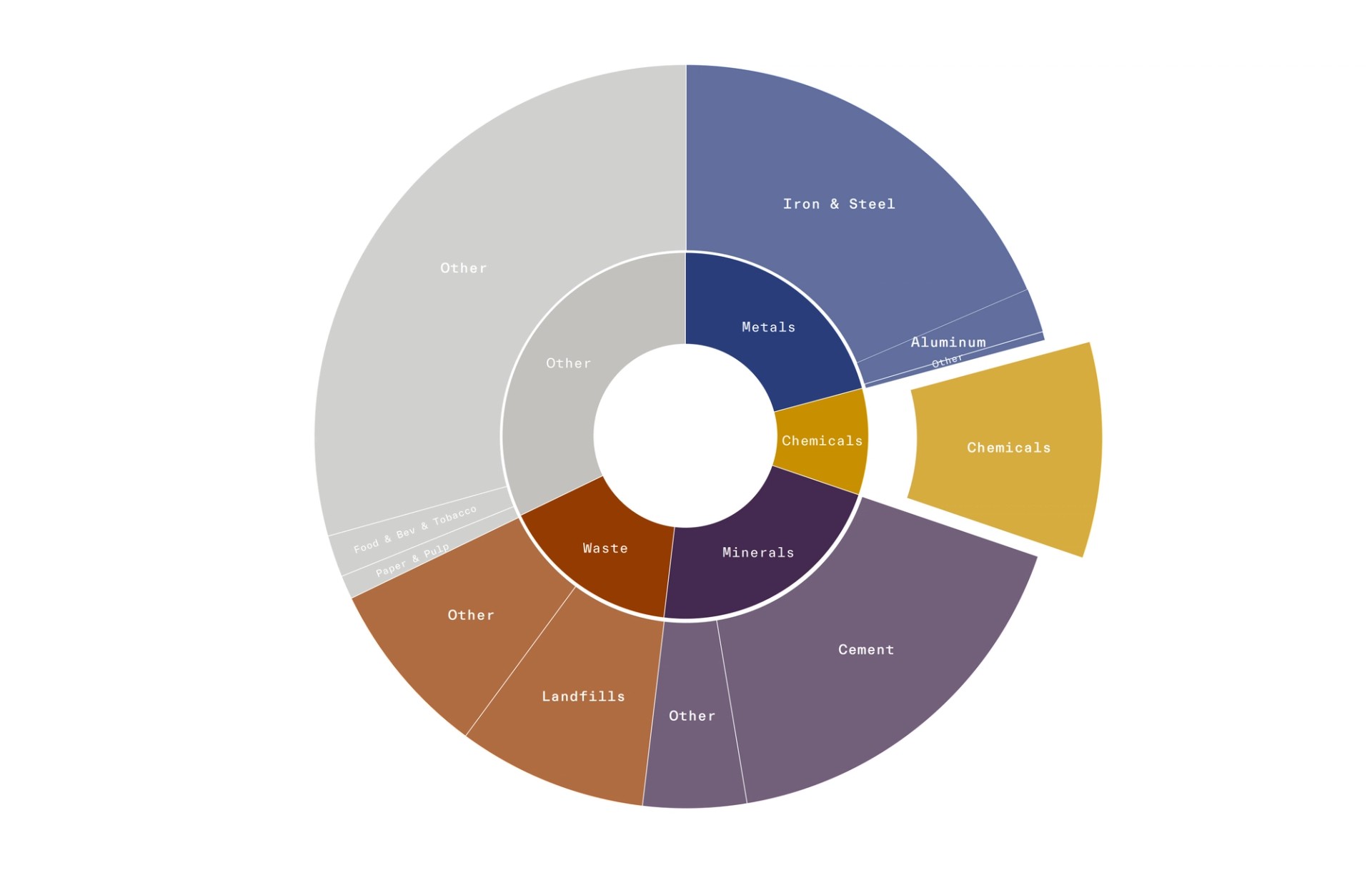
The above chart shows the chemical industry's global emissions relative to other industrial sources. The chemicals sector accounts for 17 percent of global industrial greenhouse gas emissions.
Data source: IPCC Sixth Assessment Report, IEA 2022 World Energy Outlook
Solutions
The chemical industry is complex, diverse, and global, which makes it hard to pinpoint where to start. Much of the industry is based on fossil fuels, which connects it to global histories of militarism and injustice and global networks of extraction, production, and consumption. Transforming the sector means identifying cleaner production methods, from alternative non-fossil-fuel feedstocks to the electrification of heat production. Reducing demand is also important and can be achieved through a range of strategies. Finally, the remaining facilities must operate using state-of-the-art equipment and processes that reduce pollution to the maximum extent possible. Perhaps more than anything, it means rethinking the sector’s scale and the role of communities in determining where plants are sited.
For all its complexity, there are a few simple ways to address the problem. One is to start upstream, with platform chemicals — the primary building-block chemicals — that are transformed again and again until they become recognizable consumer-facing products. Most platform chemicals are built from two elements: hydrogen and carbon. Fossil fuels like oil, coal, and gas, therefore, represent the dominant feedstocks from which the chemical industry sources hydrogen and carbon. Though their source can change, the realities of organic chemistry leave no elemental substitutes for hydrogen and carbon. Thus, eliminating fossil fuels from the chemical sector requires identifying alternative feedstocks to supply carbon and hydrogen. Alternative carbon sources include biomass and captured carbon dioxide, each with its own challenges and trade-offs. As described below, alternative sources of hydrogen are easier, though not easy, to supply.
For ammonia, the feedstock is hydrogen. Because ammonia contains no carbon, addressing its climate pollution comes down to one thing: changing how companies produce hydrogen. Today, hydrogen is usually produced from methane. Instead of Steam Methane Reforming (SMR), which reacts methane with steam to produce hydrogen and releases CO₂, companies can produce hydrogen from water using an electrolyzer powered by clean electricity. Regardless of the source of hydrogen, the second step in the manufacturing process combines hydrogen with nitrogen from the air via the Haber-Bosch process to create ammonia. In summary, decarbonizing hydrogen production is key to addressing climate pollution from ammonia manufacturing.
Our Work
Industrious Labs’ chemical sector work focuses on transforming ammonia, with an emphasis on fertilizer. Nitrogenous fertilizer has numerous differentiated products, but all of them begin as anhydrous ammonia. Fertilizer’s reliance on methane makes it especially vulnerable to global events, such as the wars in Ukraine and Iran, that restrict gas supply and drive significant price spikes, increasing costs for farmers and raising food prices. In the U.S., a handful of companies tightly control the fertilizer industry. Four companies control 75 percent of the U.S. market, and fertilizer companies have consistently used periods of rising gas prices to increase their profit margins. When gas prices begin to decline after a spike, companies keep fertilizer prices artificially high.
Industrious Labs aims to replace this harmful model with one that is cleaner, smaller, and better for farmers. Rather than centralizing production in large facilities far from farms in the Gulf South, Industrious Labs’ goal is to build a decentralized industry that uses clean energy on farms to produce ammonia for local use. A decentralized model — think 10,000 t/yr facilities, not 500,000 t/yr facilities — powered by clean energy can lower fertilizer costs, create local union jobs, retain wealth in rural communities, and grow the local economy and tax base, all while reducing harmful emissions.
Access to clean energy
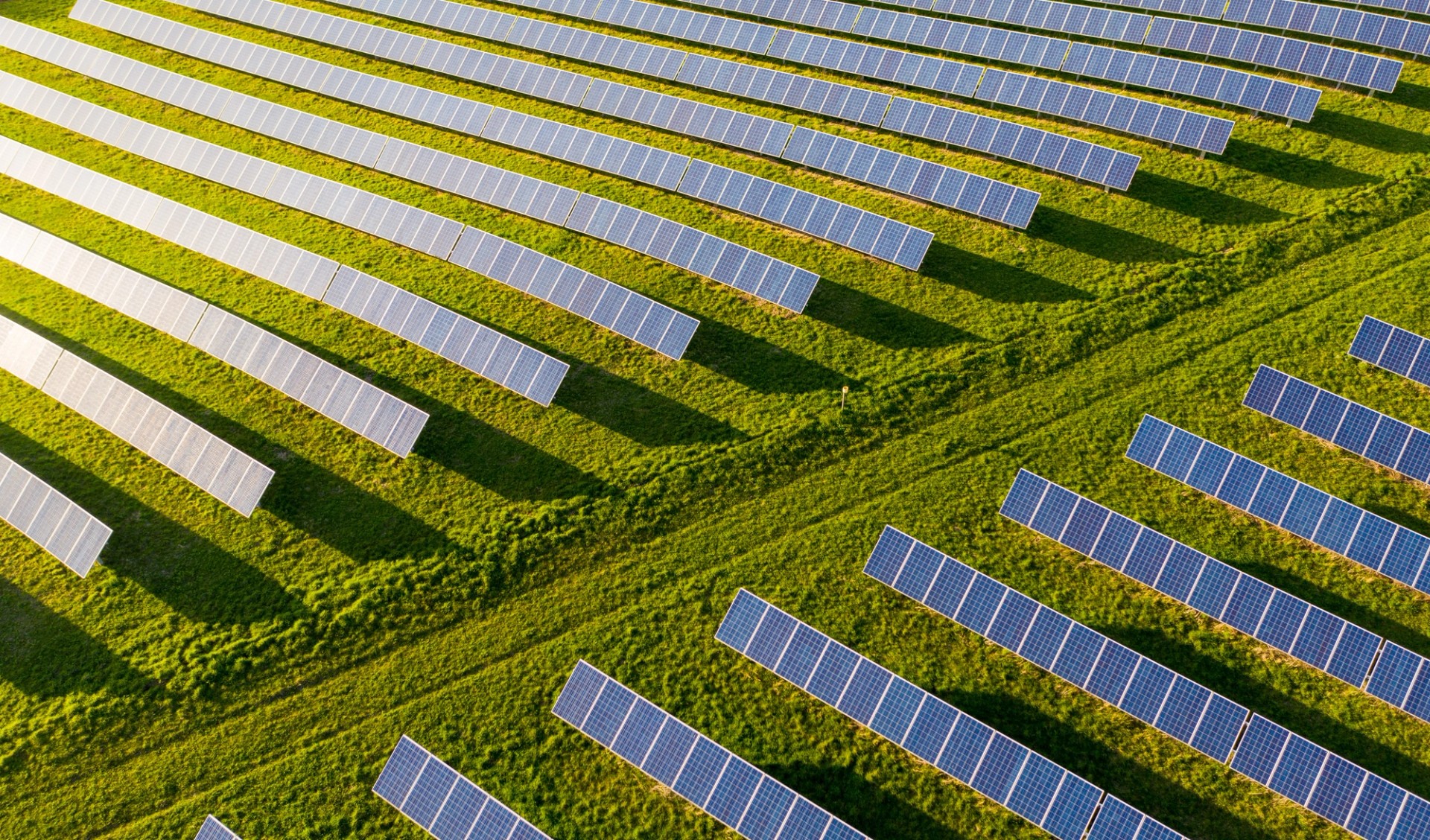
Low-cost, clean power is essential to making clean, affordable fertilizer. Outdated rate structures and utility policies impede efforts to catalyze the fertilizer industry in rural communities, where clean energy can thrive. Industrious Labs is working with policymakers, unions, farmers, and more to ensure farmers have access to clean power.

Secure Policies and Funding
Building a local fertilizer industry in states like California requires a range of policies, including smarter permitting, state targets, green certification and labeling standards, import regulations, workforce policies, and more. Industrious Labs works with farmers, labor unions, community groups, policymakers, and more to create change.
Use less
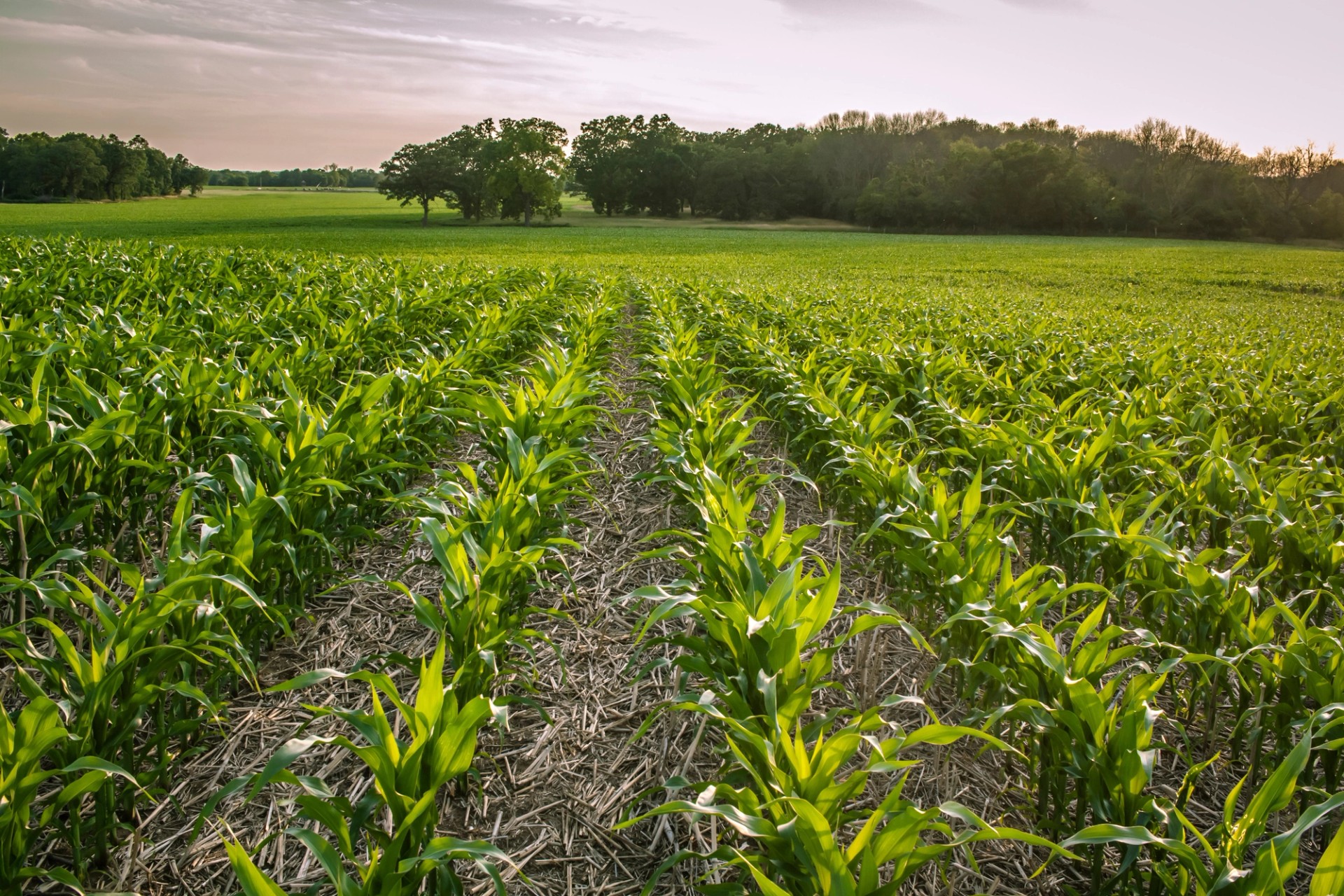
Overuse of fertilizer damages local water systems and produces potent climate pollution. Industrious Labs supports efforts to reduce overuse of fertilizer, while recognizing that nitrogenous fertilizer will remain an important input for many farmers in the decades to come.