Industrious idea: We took reporters to Indiana's steel mills. Here’s what they saw.
This is an excerpt from the 4.21.2026 edition of the Lab Report, our biweekly newsletter on industrial decarbonization. Sign up here to get it in your inbox.
Ariana Criste, Deputy Communications Director
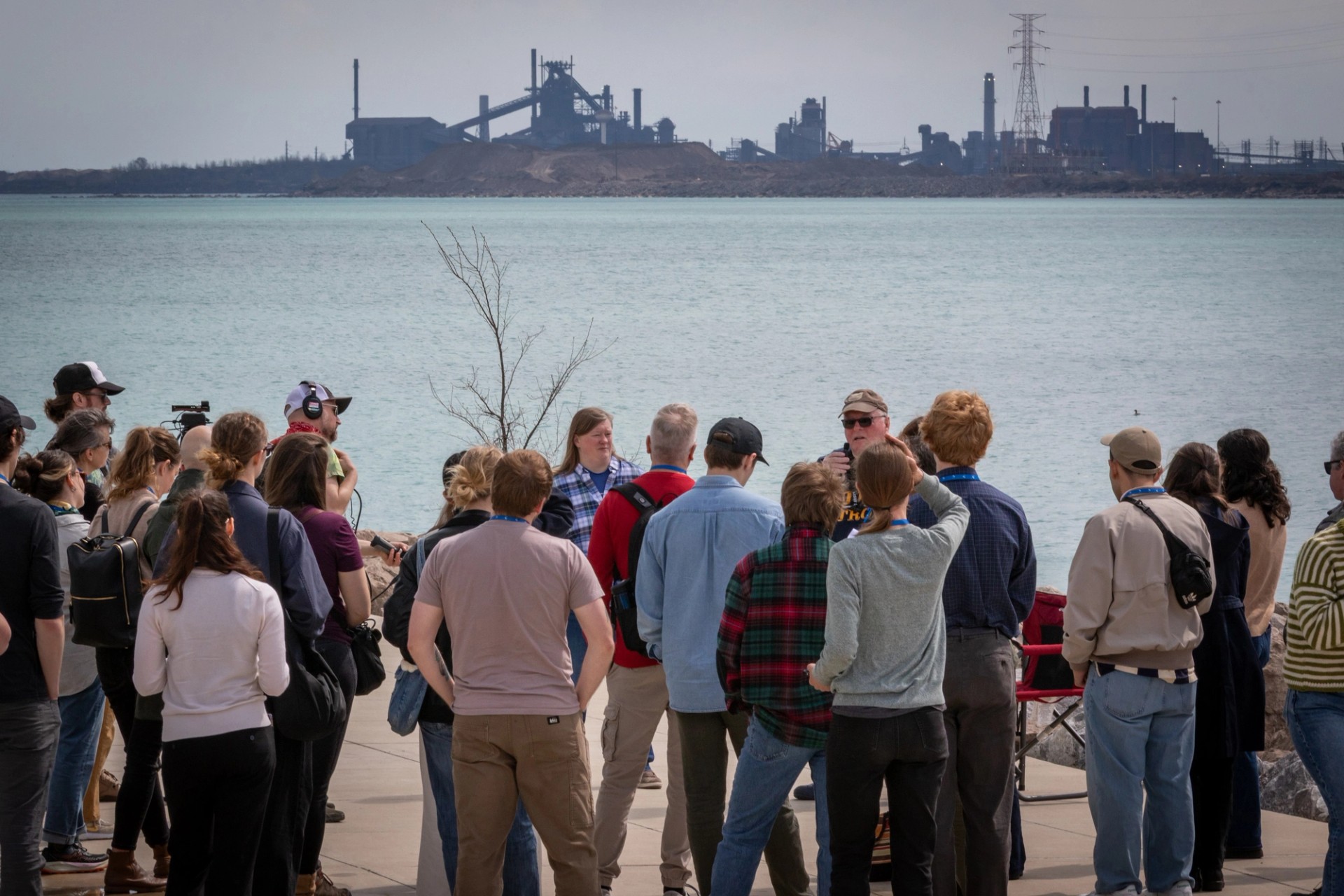
Last Thursday, Industrious Labs co-hosted a tour of Northwest Indiana steel mills at the Society of Environmental Journalists Conference, led by Maria Gallucci and Kari Lydersen of Canary Media. The tour took reporters past Indiana Harbor and Gary Works on Lake Michigan and to lunch in Gary.
It couldn’t have come at a more fitting time. Three of the country's last seven coal-based steel mills sit on that stretch of Lake Michigan shoreline. Indiana Harbor, Gary Works, and Burns Harbor together produce nearly half of all primary steel made in the U.S. — and right now their owners are deciding what to do with blast furnaces nearing the end of their useful lives.
Terry Stiegle, retired steelworker and Megan Robertson, speak to reporters with Cleveland Cliffs Burns Harbor mill in the background.
Over time, the bricks lining these furnaces wear down and must be replaced, a process called relining. It costs hundreds of millions of dollars and locks a facility into coal-based production for another 15 to 20 years. Nippon Steel, the new owner of U.S. Steel, is gearing up to do that at Blast Furnace 14 at Gary Works this spring.
Standing in downtown Gary, where Gary Works looms on the horizon and vacant storefronts tell the story of fifty years of industrial decline, that choice looks different than it does on a balance sheet.
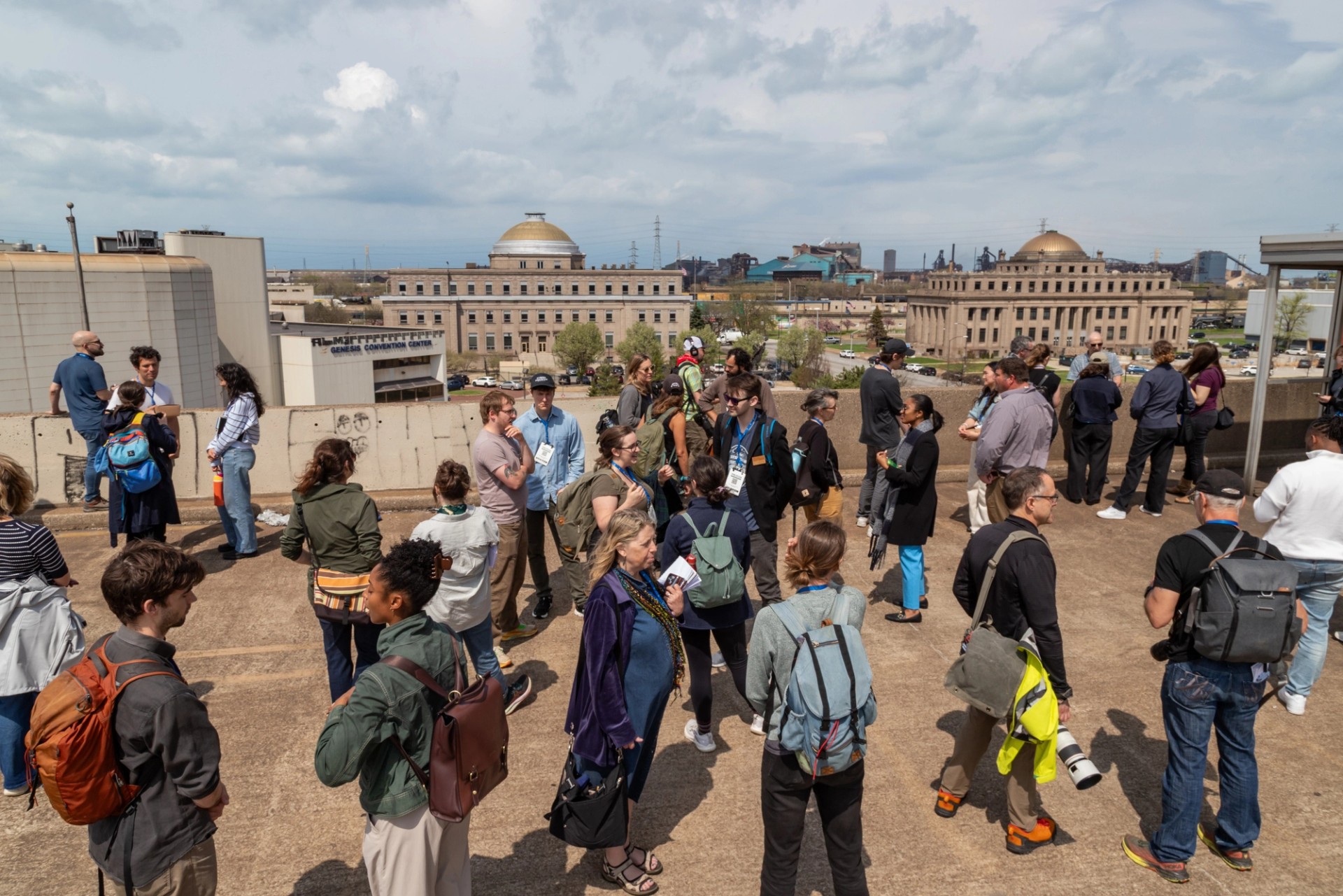
Reporters and residents chat on top of the Centier Bank Building with U.S. Steel Gary Works in the background.
U.S. Steel's CEO has described the company's Arkansas facility as where "America's next century of steel is being forged." Walking through the streets of Gary, it makes you wonder: Why does Gary get more coal and Arkansas get the future?
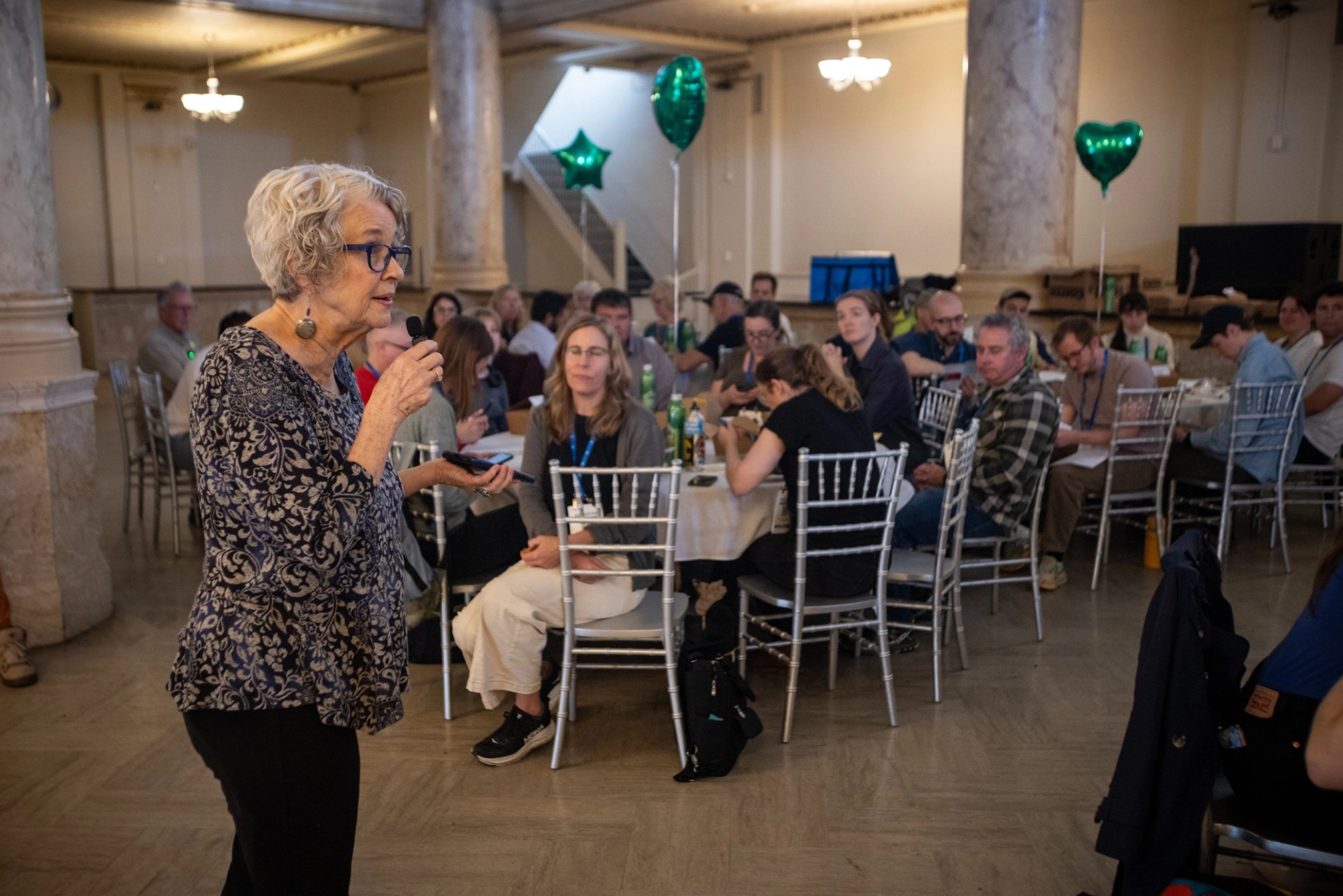
Caroline McCrady, GARD co-founder and board member speaks to reporters at the Centier Bank Building during the tour.
Sitting across from Gary residents at lunch, or standing at Whiting Lakefront Park with Indiana Harbor filling the horizon, journalists had a chance to process how these decisions by steel companies actually feel to people who live in steel communities.
It doesn't have to be this way. Nippon Steel has earmarked $3.1 billion for Gary Works, nearly enough to transition the entire facility to next-generation steelmaking. The technology exists. The market is moving toward cleaner steel. What's left is a choice that has huge ripple effects on the surrounding communities — and all of us — for years to come.
Want more like this? Subscribe to the Lab Report for updates on the movement to clean up heavy industry every two weeks.