Industrious idea: Relines, the steel industry's Hydra
This is an excerpt from the 3.24.2026 edition of the Lab Report, our biweekly newsletter on industrial decarbonization. Sign up here to get it in your inbox.
Mari Gutierrez, Senior Campaign Strategist
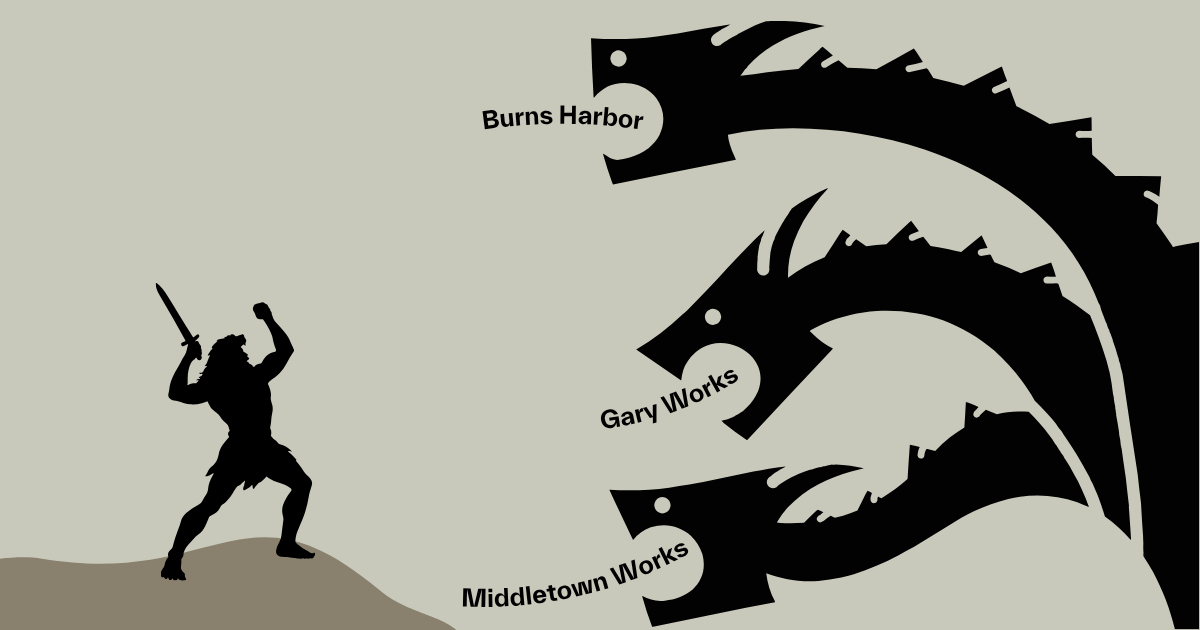
In Greek mythology, every time you cut off the Hydra's head, two more grow back. Right now, the coal-based steel industry in the U.S. is starting to look the same way: Beat back one extension of dirty ironmaking, and more surface.
Three plans to reline steel blast furnaces are now in the pipeline. First up: This spring, U.S. Steel will reline Blast Furnace #14 at Gary Works in Gary, Indiana, pushing a furnace built more than half a century ago into the 2040s. The other two on deck are at Cleveland-Cliffs' Middletown Works in Ohio and Burns Harbor in Indiana.
Blast furnaces burn coke, a form of processed coal, to convert iron ore into molten iron. Over decades, their heat-resistant interior walls wear down and require replacement. It's expensive, it takes months, and it locks a facility into coal-based production for another 15 to 20 years. That means a baby born this year in Gary will graduate high school alongside the same furnace, still burning.
Meanwhile, Nippon Steel, which now owns U.S. Steel, is investing in cleaner technology in Arkansas, which its CEO described as where "America's next century of steel is being forged." Relining doubles down on yesterday's technology at exactly the moment the industry is betting on something else.
You can rebuild a furnace, but you can’t run an industry on maintenance alone. It's a bandage for a problem that needs surgery. No new blast furnace has been built in the U.S. in nearly 50 years, and every newly proposed facility is DRI.
In the myth, the Hydra wasn't invincible. It just required a different kind of fight. That's where we are. Each of these relines will be contested, and we'll push for real investment in modern technology, workers, and the health of communities that have carried this industry for generations.
Want more like this? Subscribe to the Lab Report for updates on the movement to clean up heavy industry every two weeks.