How two Southern California campuses have started the second industrial revolution
Fossil fuels power industrial heating. California can transition to more efficient and cleaner equipment.
Vanessa Rivas Villanueva and Jacob Klein
Whether you realize it or not, our society runs on industrial boilers. These large pieces of equipment are tucked away in our neighborhoods, powering the factories that produce beloved snacks and essential medications. They also burn fossil gas, releasing smog-forming pollution that harms our communities' health.
California alone has the most industrial boilers in the United States. The South Coast Basin, the nation's smoggiest region and home to over 17 million people, has nearly 1,900 large industrial boilers. Thankfully, leaders in Southern California see the opportunity to transition to efficient, cleaner equipment and forge a path that could yield nearly $48 billion in cumulative health benefits, prevent almost two million asthma attacks, and save 3,220 lives by 2050.
California State University, Dominguez Hills and UCI Health – Irvine are showcasing how zero-emissions equipment, such as heat pumps and electric boilers, can save companies money on energy bills, improve air quality, and help California meet its climate goals.
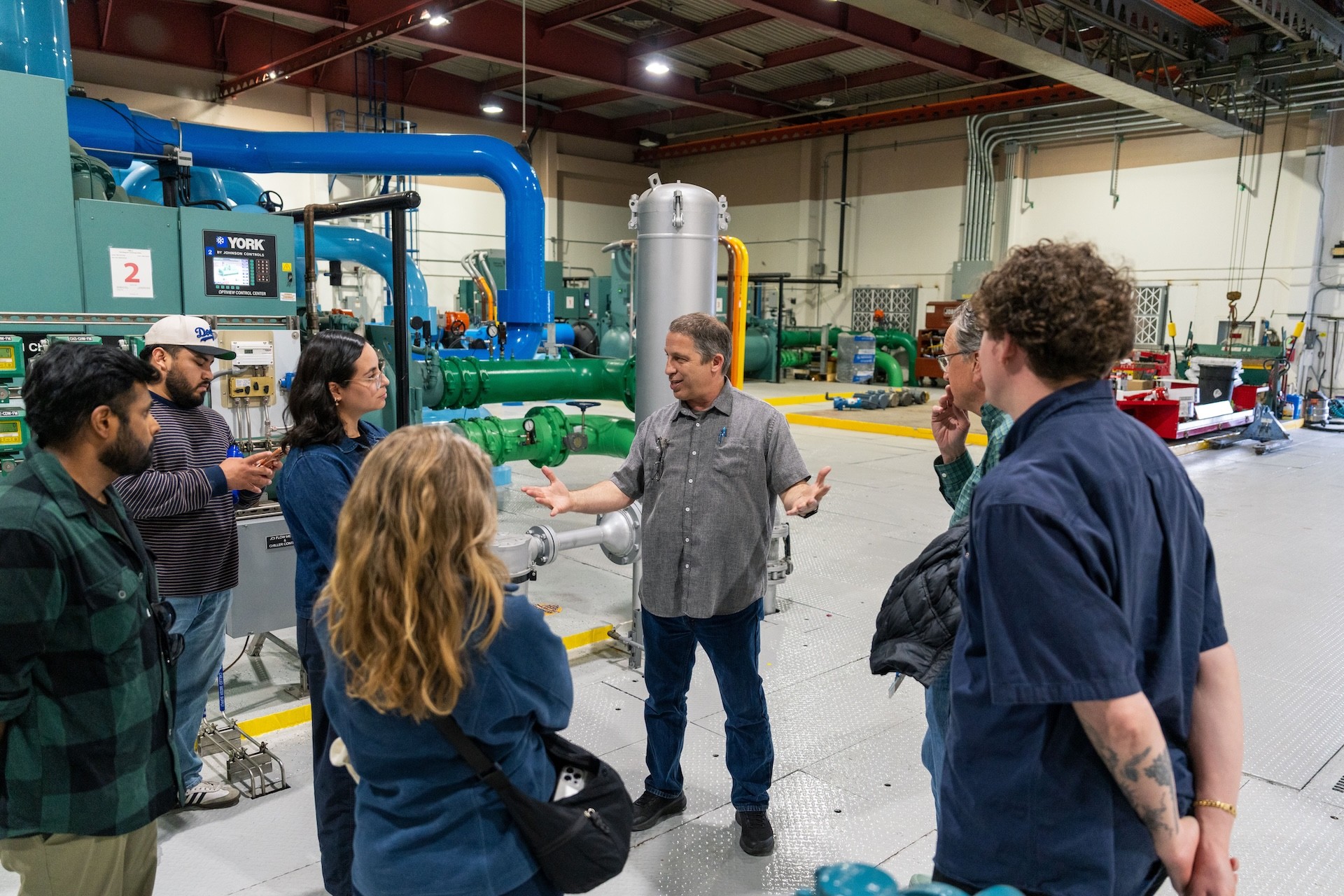
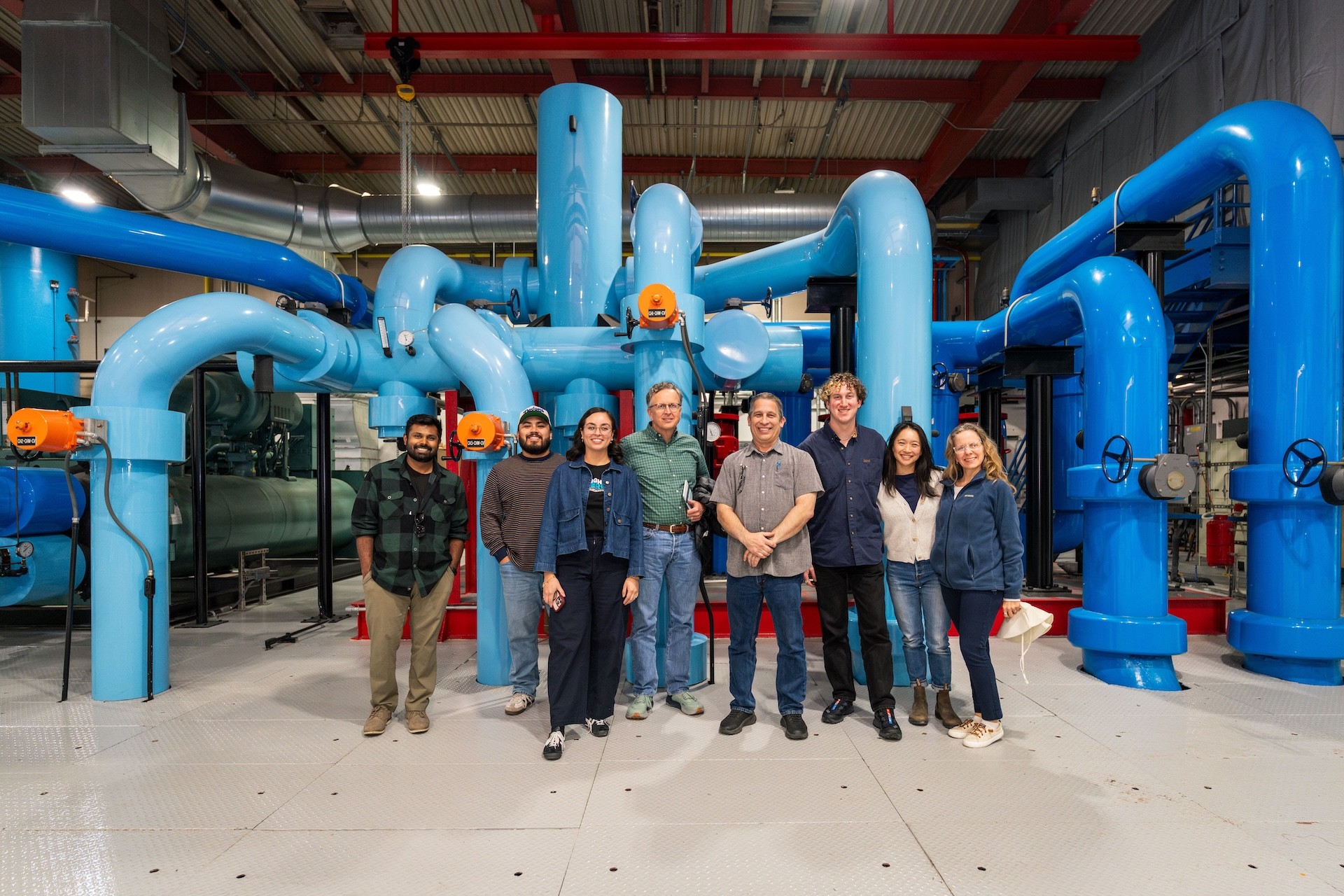
Members of the SoCal Clean Manufacturing Coalition with Kenny Seeton in CSU Dominguez Hill’s Central Plant. (Hannah Benet for Earthjustice)
California State University Dominguez Hills: “If better is possible, good is not enough”
California State University (CSU) Dominguez Hills set a goal to reduce campus gas use by 80%, installing, at the time, the largest industrial heat pump project on the West Coast. The campus surpassed its goal and has now cut its demand by an astonishing 95%. They are also paying less for energy costs. CSU Dominguez Hills has become the poster child throughout the state for energy savings and energy efficiency innovation, all thanks to Kenny Seeton, their Director of Central Plant Operations and Strategic Energy Projects. Seeton, known fondly by many of his colleagues as “Kenergy” for his infectious personality and relentless pursuit of energy efficiency, spearheaded the campus’s decarbonization efforts.
Despite some reluctance from colleagues and engineers to adopt industrial heat pumps, Seeton proved that the campus could save money and reduce emissions by adopting the technology. CSU Dominguez Hills has received millions of dollars in rebates from Southern California Edison’s Clean Energy Optimization Pilot, a multi-year program that gives campuses performance payments. Using those funds to replace gas-powered boilers, the savings from the heat pump’s efficiency then helped Seeton purchase more energy-efficient technologies, until he displaced 95% of the campus’s gas use. His approach has become a model for other SCE customers, earning CSU Dominguez Hills national recognition.
The close partnership with SCE and the trust Seeton has built with CSU leadership has allowed him to advance building electrification, renewable energy installations, and retrofits. Today, about a third to half of the university’s daily energy comes from rooftop solar. The campus also has one of the largest behind-the-meter battery storage installations in Southern California, enabling the entire campus to reduce electricity demand when it is most expensive.
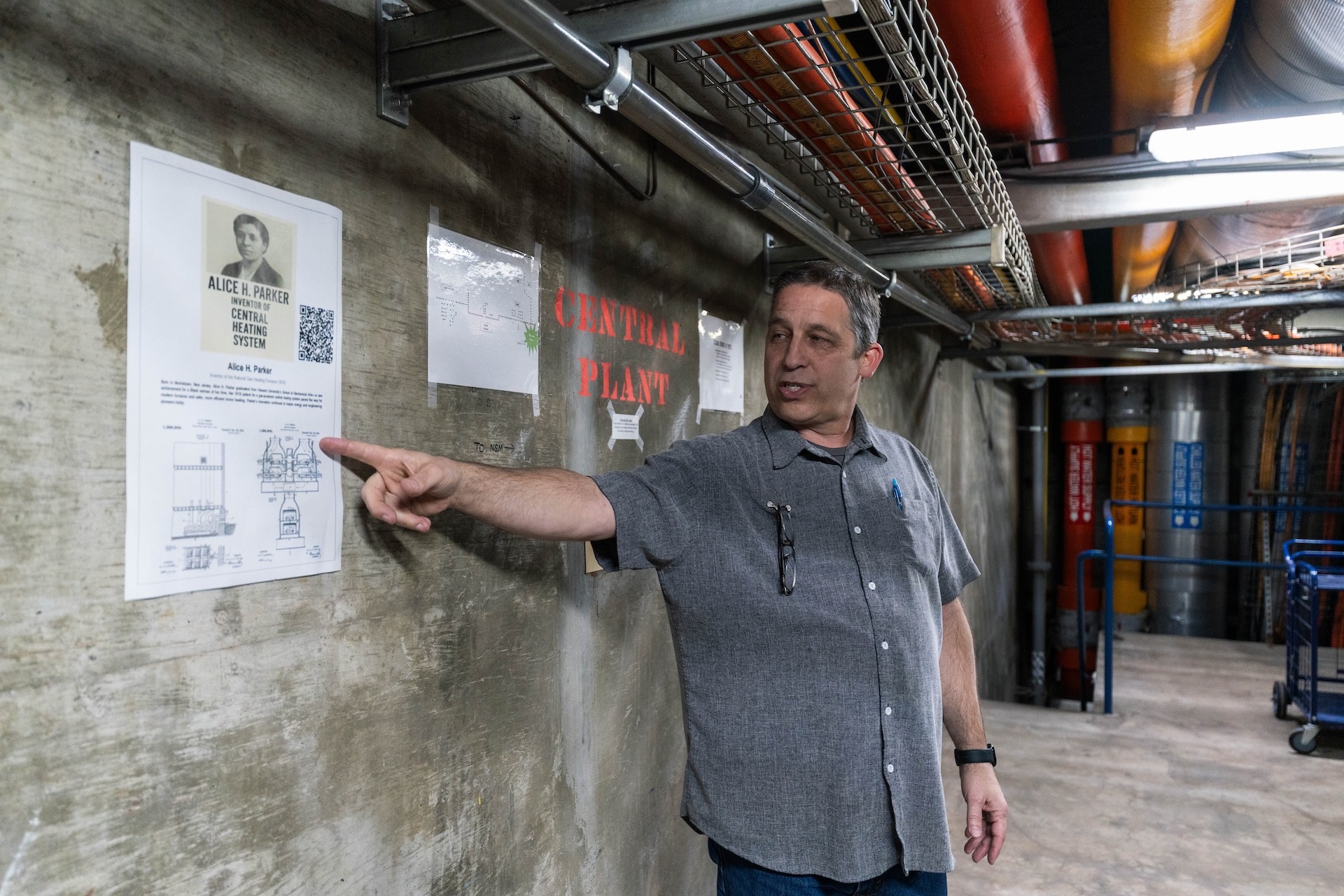
Kenny Seeton, Director of Central Plant Operations and Strategic Energy Projects at California State University Dominguez Hills, points to a poster of Alice H. Parker. (Hannah Benet for Earthjustice)
While the status quo is often considered good enough to most, Seeton’s unique leadership and passion demonstrate a blueprint for innovative action with concrete results. Seeton often returns to the refrain “if better is possible, good is not enough,” reminding us that we don’t need to settle for business as usual.
At the university’s Central Plant, a poster honors Alice H. Parker, whose pioneering work in central heating shaped systems for decades. Her contributions helped underpin modern society and the economy—an especially commendable feat for a Black woman in the early 20th century, when Black women were rarely recognized or supported in their work. Her vision still guides us, even as we prepare for heating and cooling that does not burn dirty fuels.

UCI Health – Irvine, the nation's first all-electric acute care hospital. (Hannah Benet for Earthjustice)
Healthcare without harm: UCI Health – Irvine is the nation’s first all-electric hospital
To provide essential healthcare services, hospitals have strict engineering requirements. They also need a lot of energy. Unfortunately, most hospitals across the country rely on burning fossil fuels to provide this energy. The healthcare sector alone contributed 10% of the United States’ total greenhouse gas emissions and 9% of air pollution in 2023. UCI – Irvine has now changed the game.
The Irvine-based hospital recently made history by unveiling the nation's first all-electric acute care hospital, delivering critical health services without contributing to the same emissions that put people in the hospital for asthma, cardiovascular, and other pulmonary conditions.

Workers preparing meals at UCI Health – Irvine’s all-electric kitchen. (Hannah Benet for Earthjustice)
UCI Health – Irvine was designed to operate entirely on electricity and has zero natural gas infrastructure. The hospital has solar panels for on-site energy generation, an extensive recycled water system, and energy-efficient lighting. All of this technology, which was supported through close collaboration with the local utility Southern California Edison, powers the 24-hour emergency department, advanced imaging, laboratory services, pharmacy services, and Orange County’s first inpatient bone marrow transplant and cellular therapy program. UCI Health – Irvine proves that complex energy needs can be met reliably without methane gas.
The hospital’s cutting-edge campus was made possible by visionary leadership and bold action. While an all-electric hospital of this scale is a significant financial investment, leaders of the complex remain steadfast about the long-term cost and health benefits. During a recent tour with environmental groups, Joe Brothman, the hospital's Director of Facilities and General Services, shared that UCI pursued this approach due to the ongoing volatility of gas prices and a desire to reduce the hospital’s pollution impact on the surrounding community. UCI sets the standard for the future of hospitals and reinforces the need for long-term decision-making that promotes the well-being of entire communities, not just patients.
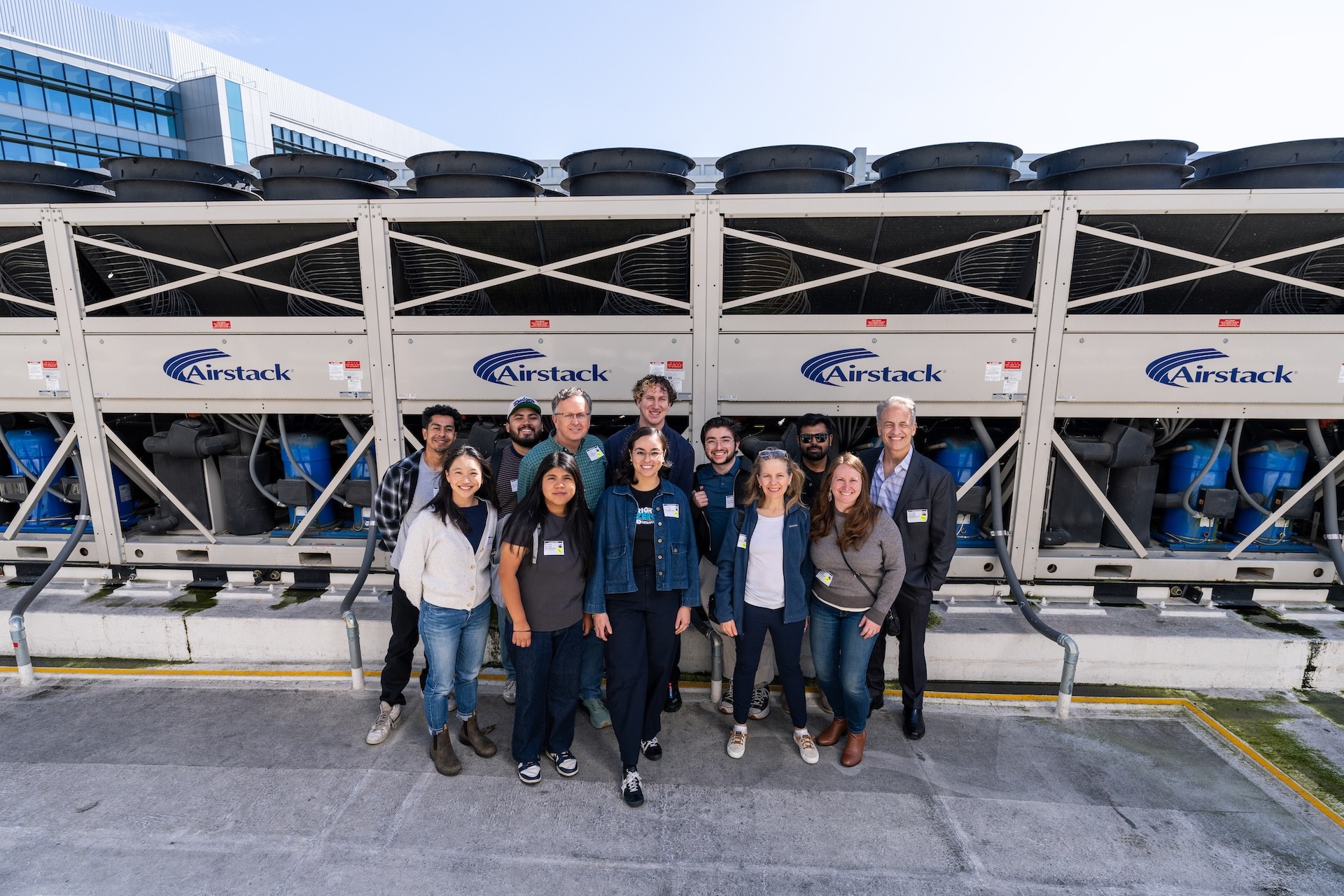
Members of the SoCal Clean Manufacturing Coalition in front of industrial heat pumps at UCI Health – Irvine during a recent tour of the hospital. (Hannah Benet for Earthjustice)
What’s next?
California is on the cusp of a great transformation. As the home of the most industrial boilers in the country and with nearly 70% of our counties experiencing dangerously unhealthy air, we must lead the transition to technology that does not pollute our communities. More and more facilities are answering the call. Health systems like Kaiser and UCSF are setting all-electric standards for new construction, but there is still work to be done.
California’s manufacturing sector, the largest in the country, is lagging behind. Investing in this industry means supporting this sector as it evolves. Local agencies responsible for air quality are considering zero-emissions standards for industrial boilers to avoid severe federal sanctions that could jeopardize billions in federal highway funding for failing to meet federal air quality standards. In Southern California, the South Coast Air Quality Management District is updating its standards for industrial boilers and considering rulemaking to clean up nearly 1,900 large boilers across the region.
A shift to more efficient industrial equipment will put California at the forefront of the second industrial revolution. Through visionary goals for clean technology deployment and incentives to support early adopters, manufacturers can continue to provide us with the goods we depend on and the jobs that support families without the unnecessary harm of pollution. Leaders like CSU Dominguez Hills and UCI Health – Irvine have set the new standard. Let’s follow their example.